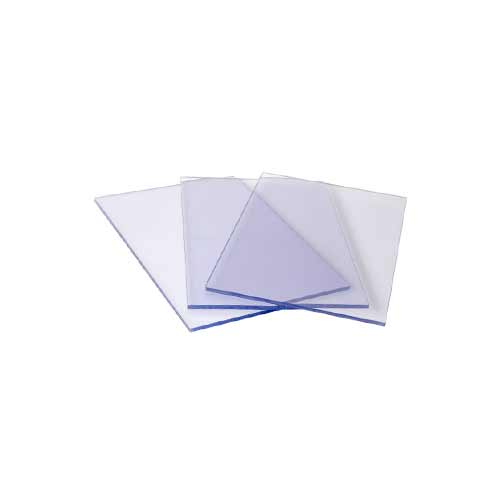
Cellulose acetate replicating tapes soften in acetone and can be applied to a surface which has been wetted with acetone. They are stripped off when dry. A thickness of 22µm is used for finer detail replication. Replicating Tape (50um, 38mm x 1.1m)
Cellulose acetate replicating tapes soften in acetone and can be applied to a surface which has been wetted with acetone. They are stripped off when dry. A thickness of 22µm is used for finer detail replication.
This material is cellulose acetate of a thickness 75 microns. It is soluble in acetone.
A piece of the replica material of a size suitable to cover the area to be replicated is cut from the sheet. A
drop or two of acetone is placed on to the specimen surface and the replica film immediately applied
(allowing surface tension forces to pull it down; no pressure is required). Make sure that no air bubbles
are trapped during this procedure or the area will not be faithfully replicated. The film should be left to dry
for about 10 minutes when it will separate very easily from any reasonably flat surface but may need
teasing from a very rough surface.
It can then be stretched between two pieces of cellulose tape, structure side outwards, wrapped round a
microscope slide, and placed in a vacuum coating unit for oblique shadowing with palladium/gold alloy (or
platinum) and backing by a carbon evaporation.
The required area is cut out from the film, and laid, carbon side up, on to microscope grids on a wire mesh
standing in a dish of acetone, with the acetone just touching the bottom of the mesh.
After one hour, remove the grids from the mesh and wash individually in acetone before drying.

 Products
 SERVICES
 Software
 New
New